Storm-Season Ready, No Permit Needed
Call now for a free on-site estimate.
No Permit Required
A beetle-killed pine that went brown over the summer, a red oak that split in a spring storm, or a healthy sweetgum that's simply too close to the slab — Cherokee County Tree Co. takes it down in sections, rigs every piece before the saw starts, and hauls away everything when we're done. And here's the straight answer to the question we get most: Jacksonville, Texas does not require a permit to remove a tree on private property. We put the urgent calls first: a tree on your roof or across your driveway doesn't wait behind a routine job booked for next week.
Where We Work
We work out of Jacksonville and cover all of Cherokee County plus the Smith, Anderson, and Henderson County sides of it. Out toward the edges, like Wells or Chandler? Call and ask; we'd rather give you a straight answer than waste your afternoon. See all the areas we serve →
The tree you've been meaning to deal with: crowding the foundation, shading the garden, or in the way of a shop or fence line. With no removal permit in Jacksonville, the only thing between you and a clear yard is a written estimate and a date, usually within the same week.
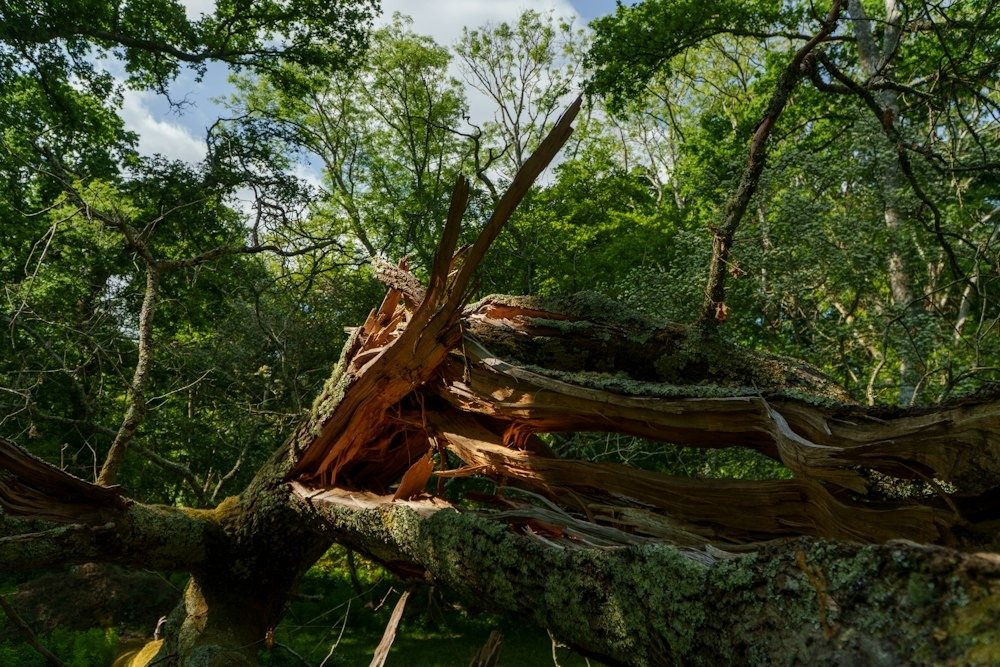
Spring is severe-storm season in East Texas, with a second run in the fall, and an ice storm comes through every few winters. When a pine is on the house or an oak limb has the driveway blocked, we move it to the front of the schedule. A split or half-uprooted tree can keep settling after the wind dies down, so we treat these as hazard calls, not next-week appointments.
The Piney Woods produce two kinds of hazard tree we see every week. The first is the beetle-killed loblolly: southern pine beetle can take a pine from green to rust-brown in a season, and a dead pine dries out and gets brittle fast. The second is the tall pine or post oak on saturated ground, where the sandy loam over clay stays wet after a soaking spring and a shallow root plate starts to let go. We assess the whole tree, from root flare to crown, before recommending removal, and we'll tell you honestly when a tree only needs watching.
No permit, but the city does have rules about the right-of-way. Under § 9-13 and § 19-271 of the Jacksonville code, any tree or limb hanging over a street, alley, or sidewalk lower than 12 feet is a nuisance the owner has to abate, and the city can do the work and bill you if you don't. In the sight triangle at an intersection, branches have to clear 8 feet above the gutter line. If the tree that's causing the problem is the one you want gone anyway, we take it down and clear the overhang in the same visit. If it's worth keeping, a trim usually fixes it.
Cost Planning
| Tree size | Typical cost range |
|---|---|
| Small tree (under 30 ft) | $300–$700 |
| Medium (30–60 ft) | $700–$1,500 |
| Large (60 ft+) | $1,500–$3,500 |
| Storm / emergency removal | Priced on-site after the hazard is assessed |
Ranges are typical for East Texas based on published industry cost guides; your written estimate reflects your specific tree and site.
What moves the number is height, how close the tree is to a structure, fence, or power line, and whether it can be felled whole or has to come down in rigged sections. Every removal gets a free, written estimate before any work starts.
Get a Free EstimateUse the Cost CalculatorRead the Cost Guide
Wade spent eight seasons on a utility line-clearance crew across Cherokee and Smith counties before starting this company in 2016. That's where you learn to drop a tree in pieces, in the right order, with the rigging set before anyone touches a saw.
We carry the coverage that protects your property if a big removal beside the house or under a service drop doesn't go exactly to plan. Most homeowners never think about this until the day it matters.
You'll know the cost before we start cutting, not after. No add-on fees when the truck shows up, and no pressure to sign on the spot. If the tree doesn't need to come down, we say so.
Trunk sections, limbs, and brush all leave on the truck the same day unless you want the firewood. The city's brush pickup only takes wood 8 inches or smaller, cut to 3 feet and bundled, so a full removal is almost always a haul-off job. We don't leave you a yard full of logs to figure out.
How It Works
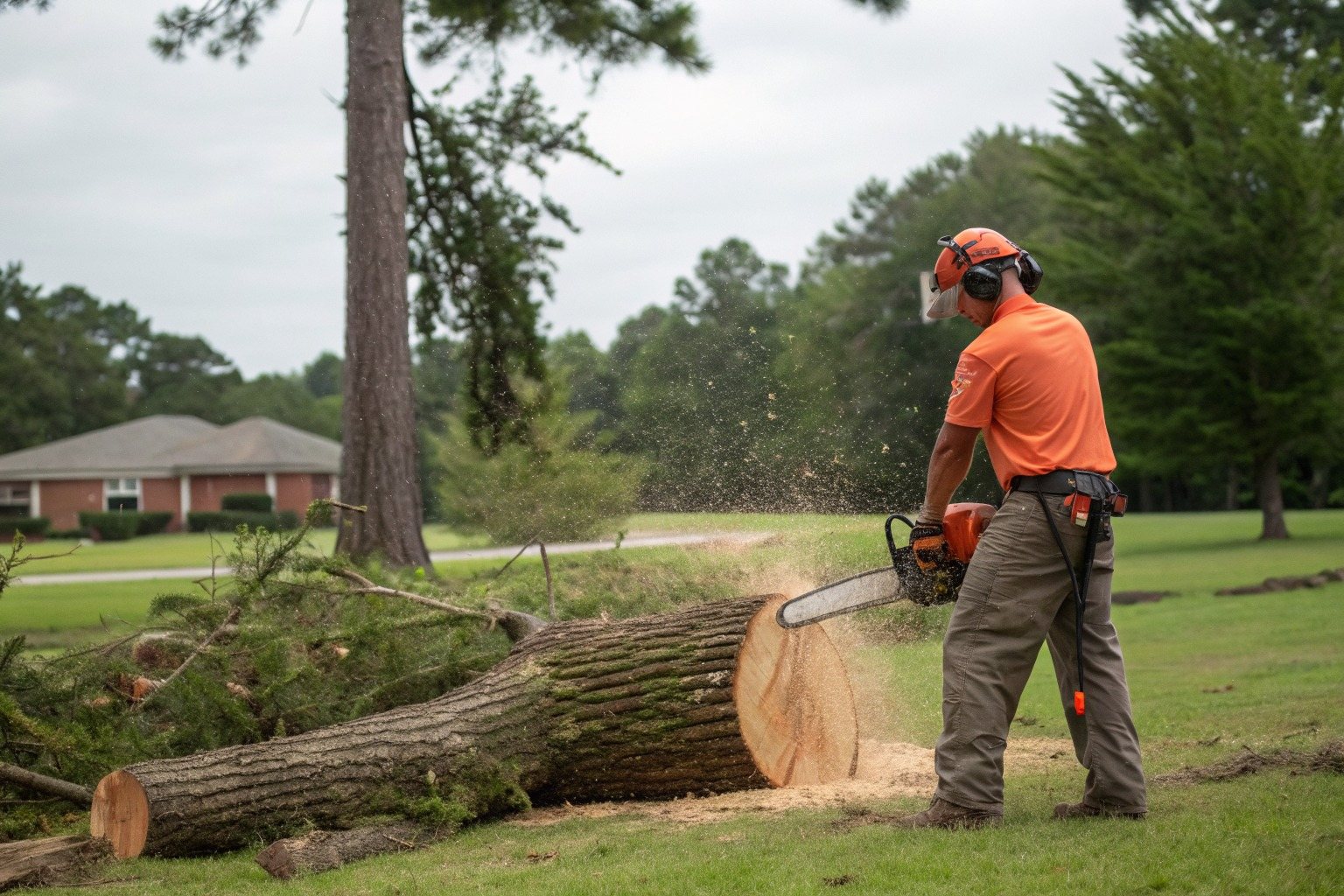
For active hazards — a tree on a structure, blocking a driveway, or leaning into a power line — we prioritize same-week and often same-day response, and storm calls go ahead of routine work. Call and describe what you're looking at so we can gauge urgency accurately. If the tree is touching a power line, stay clear of it and call the utility as well as us.
No. Jacksonville's Code of Ordinances has no tree-removal permit for private property, and Cherokee County has no county tree rules. The rules that still apply concern the right-of-way: limbs over a street, alley, or sidewalk must clear 12 feet, and branches in an intersection sight triangle must clear 8 feet above the gutter line. We check both during your estimate. Fold-in towns like Bullard have no permit either; for the smaller towns, we'll tell you to confirm with the city office. See our permits guide.
Yes, carefully. Wade's line-clearance years taught us where our work stops and the utility's begins: limbs on the primary lines are the utility's job, and we'll say so instead of touching them. Trees near a service drop need extra rigging and sometimes a call to the utility before we cut. We walk you through it during the estimate.
Call or request a free estimate and we'll take a look.
Enter your city or ZIP code to see if we serve your neighborhood.